
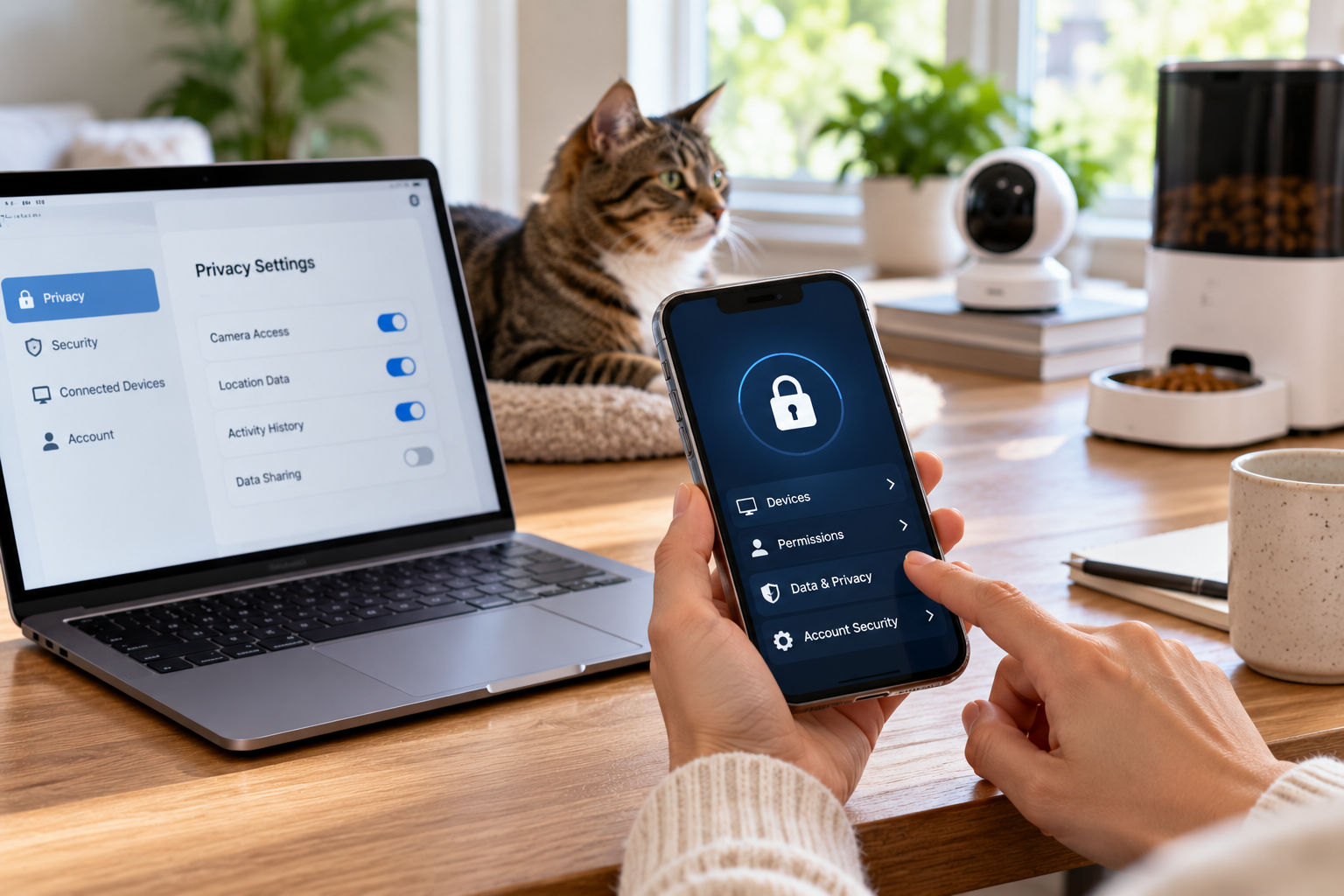
Smart pet devices can collect more information than you might expect.
GPS trackers can process location data. Pet cameras may capture video and audio inside your home. Smart feeders record feeding activity, while connected litter boxes and wearables may track information about your pet’s behavior, weight, activity, or routines.
Much of this data is what allows the devices to provide useful features. But before connecting another camera, tracker, or sensor to your home network, it’s worth understanding what information the device collects, where that information may be stored, and what controls you have over it.
Here’s what pet owners should look for.
What Types of Data Can Pet Tech Collect?
The information collected depends on the device and the features you use.
A connected pet device may collect or process information such as:
- Your pet’s location
- Location history
- Video or photographs
- Audio
- Feeding times and portions
- Litter-box usage
- Activity and sleep information
- Pet weight or other measurements
- Device usage and diagnostic information
- Account and contact information
- Information about the phone or device used with the app
Some products collect only a few of these categories, while others combine several.
The manufacturer’s privacy policy should explain what information is collected and how it is used.
GPS Trackers Can Reveal More Than Your Dog’s Location
Location tracking is an obvious feature of GPS pet trackers, but location history can potentially reveal patterns beyond where your dog goes.
For example, repeated location data could reflect when a pet—and potentially its owner—is usually at home, where walks commonly occur, or places that are visited regularly.
That doesn’t mean GPS trackers are inherently unsafe. Location information is necessary for the primary purpose of these devices.
It does mean that owners should understand whether location history is stored, how long it is retained, and whether there are options to delete it.
Pet Cameras Bring Cameras and Microphones Into Your Home
Pet cameras deserve particular attention because many include microphones, speakers, and internet-connected video.
Depending on the product and settings, video may be viewed live, recorded locally, stored in the cloud, or retained as event clips.
Before installing one, check:
- Whether recordings are stored
- Where recordings are stored
- How long they’re retained
- Whether cloud storage requires a subscription
- Who can access the camera through your account
- Whether two-factor authentication is available
- Whether the microphone can be disabled
- Whether recordings can be deleted
Camera placement matters too. Consider what areas of your home are visible—not just where your pet spends time.
If you’d rather keep footage at home, see cameras that record locally without a subscription.
Smart Feeders and Litter Boxes Can Build Detailed Routines
A feeding log or litter-box visit may seem relatively harmless by itself. Over time, however, connected devices can build detailed records of a pet’s daily routine.
A smart feeder might record when meals were dispensed and how much food was provided. A connected litter box may record visits, weight measurements, or other usage information.
Those records can be genuinely useful for monitoring routines and noticing changes.
But owners should still know whether the information remains only within the device or app, is stored on company servers, or is shared with other services.
Related: feeders without Wi-Fi and how litter boxes track visits.
Why Do Pet-Tech Companies Collect Data?
Data collection isn’t automatically a sign of a privacy problem.
Some information is necessary for a feature to function. A GPS tracker needs location information to show where your dog is. A cloud camera needs to transmit data if you want to view video remotely.
Companies may also collect technical information to maintain their services, troubleshoot problems, improve products, prevent fraud, or understand how their apps are being used.
The important questions are what is collected, why it is collected, how long it is kept, and whether it is shared with anyone else.
Look Beyond the Product Page
Marketing pages usually emphasize what a device can do.
For privacy questions, the company’s privacy policy and account settings are often more useful.
Before buying or connecting a device, look for information about:
- Categories of information collected
- Reasons the information is collected
- Data retention
- Third-party sharing
- Advertising or analytics
- Account deletion
- Data-deletion requests
- Security practices
- Children’s privacy
- Changes to the privacy policy
Privacy policies can be long, but searching the page for terms such as location, video, audio, retention, advertising, third party, delete, and security can make them easier to review.
Protect the Account That Controls the Device
Even a well-designed connected device can become less secure if the account controlling it isn’t protected.
Use a strong, unique password for your pet-tech account rather than reusing a password from another service.
If the manufacturer offers two-factor or multi-factor authentication, enabling it adds another layer of account protection.
Also review who has access to shared pet accounts or camera feeds and remove access that is no longer needed.
Keep Apps and Device Software Updated
Connected devices may receive software or firmware updates that fix bugs, add features, or address security issues. Keep the manufacturer’s app updated and enable automatic device updates when appropriate and supported.
It’s also worth considering how long a manufacturer provides software support. A connected device that still physically works may become less attractive to use if its app or security support is eventually discontinued.
Your Home Wi-Fi Matters Too
Smart pet devices don’t operate in isolation. Many connect directly to your home Wi-Fi network.
Basic home-network security can therefore help protect connected devices.
Useful practices include:
- Using WPA2 or WPA3 Wi-Fi security when supported
- Using a strong Wi-Fi password
- Changing default router administrator credentials
- Keeping router firmware updated
- Removing devices you no longer use from your network
Some routers also allow smart-home or Internet of Things devices to be placed on a separate guest or IoT network.
What Happens to Your Data If You Stop Using the Device?
Deleting an app from your phone doesn’t necessarily delete the account or information associated with it.
If you stop using a smart pet device, check whether the manufacturer provides a way to:
- Delete your account
- Delete stored video
- Remove location history
- Delete pet profiles
- Request deletion of stored personal information
If you sell or give away the physical device, also follow the manufacturer’s instructions for removing it from your account and performing a factory reset.
See also what happens if you cancel a camera subscription.
Questions to Ask Before Buying a Smart Pet Device
Before purchasing a connected pet product, consider asking:
Does this device actually need an internet connection?
What information does it collect?
Does it record video or audio?
Is information stored locally or in the cloud?
How long is data retained?
Can I delete my information?
Does the company share information with third parties?
Does the account support two-factor authentication?
How long does the manufacturer provide software support?
What functionality remains if I stop using the company’s cloud service?
You don’t necessarily need a product with the fewest connected features.
You need to understand the tradeoff between the information you’re providing and the features you’re receiving in return.
The Bottom Line
Smart pet technology can provide useful information about a pet’s location, feeding, activity, behavior, and daily routines. Those features often depend on collecting and processing data.
That doesn’t mean connected pet devices should automatically be avoided.
It does mean privacy and security deserve a place alongside price, battery life, subscriptions, and features when comparing products.
Before connecting a device to your home or attaching it to your pet, understand what it collects, where the information goes, what controls you have, and what happens to the data when you stop using the service.